

Precautions and Use of Machinery in Cold Weather
Cold weather impairs the performance of all machinery, and the risk of damage increases as temperatures drop. Water, snow, and ice create additional challenges. With the right preventive measures, it is possible to avoid both damage and downtime.
Basic Rule
The manufacturer’s instruction manual always takes precedence. If there are no specific instructions regarding refrigeration, follow the instructions below.
General
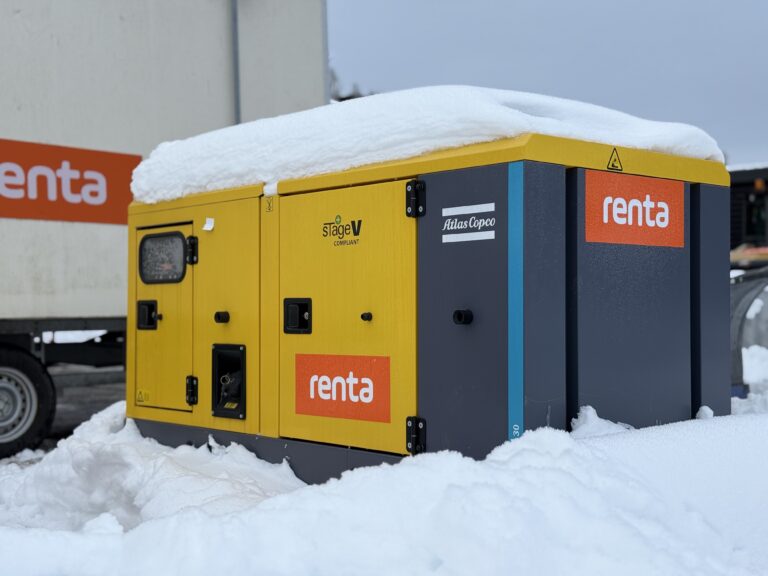
- Protect controls and panels—such as elevator control panels—from water, snow, and ice whenever possible. Use the cover that comes with the control panel.
- Drive more carefully the colder it gets—move more slowly and be more patient.
Internal-combustion-engine-powered machines and hydraulic machines
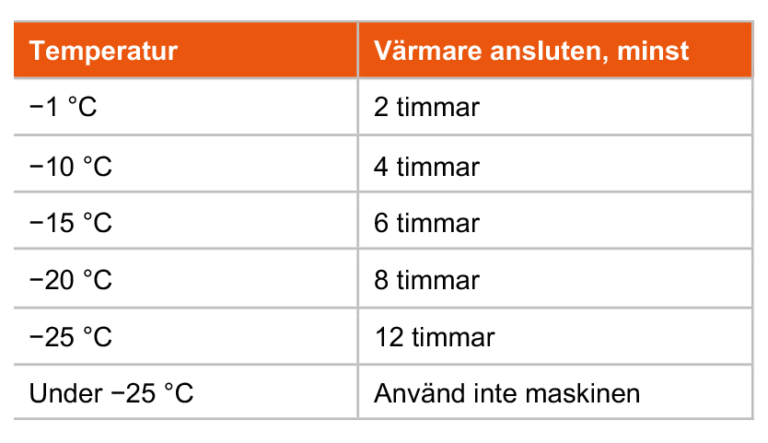
Engine or hydraulic heater must be connected before starting. Recommended connection time—always check the instruction manual:
- If the machine does not have a heater, starting is not permitted at −20 °C or colder.
- Let the machine idle for at least 15 minutes before applying any load to the hydraulic system.
- Start with small, slow movements until the oil is hot.
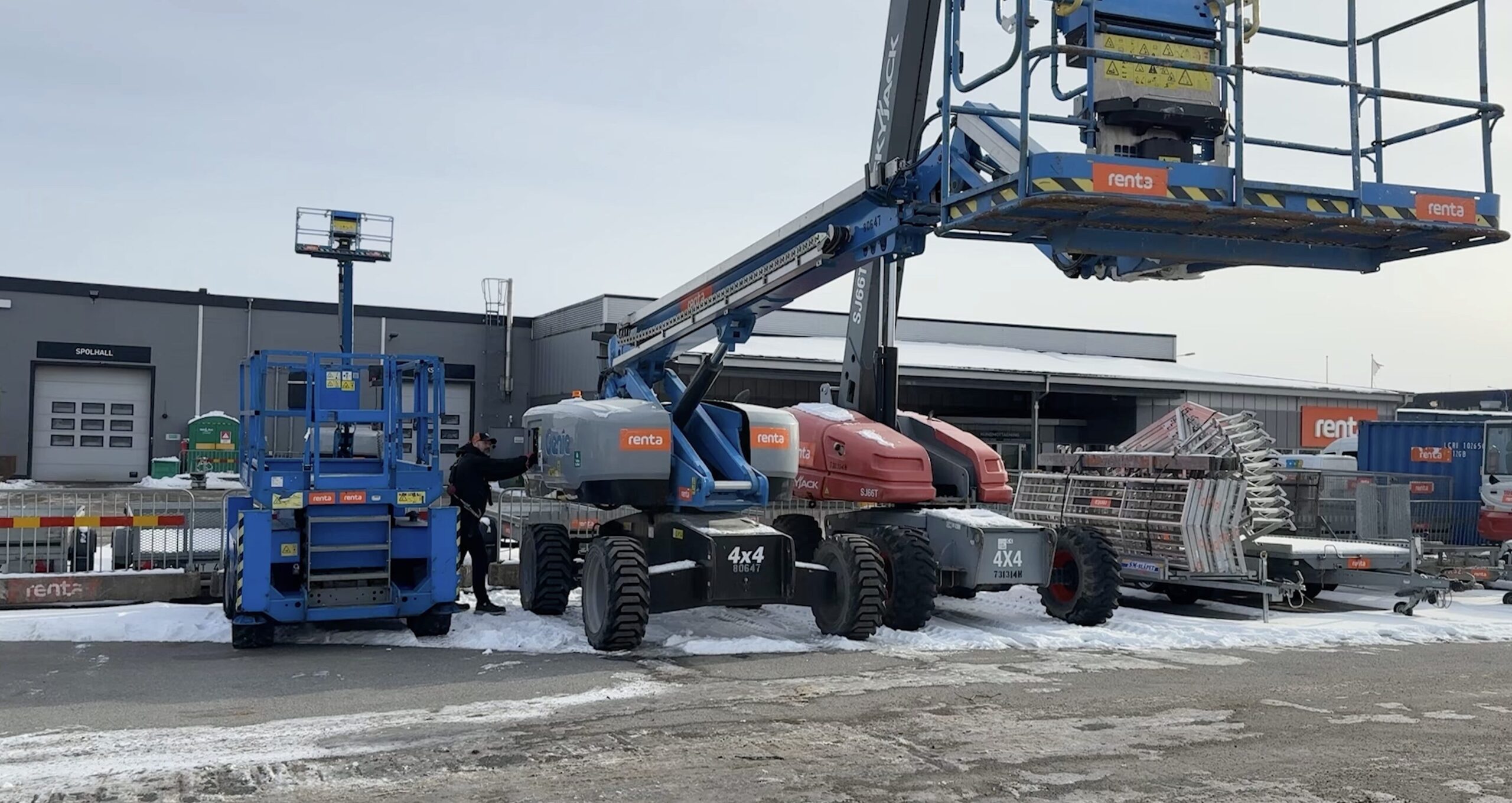
Starting and Operating a Lift in Cold Weather
- Make sure the heating cable has been connected as shown in the table above. On diesel lifts, it is the green cable under the lower control panel.
- Start the engine.
- Let the machine idle for about 30 minutes before starting work.
- Perform the daily inspection while the engine is idling.
- During extended installation work in cold weather: move the boom approximately every 15 minutes to keep the hydraulic system warm.

Battery-powered machines and lifts
- Battery-powered machines should be kept on charge as soon as they are not in use during the winter months if they are stored outdoors.
- Of course, it’s best to store smaller power tools indoors.
- Large boom lifts and machines with lithium batteries have built-in battery heaters that activate during charging, and those batteries are also not as sensitive to cold as other types.
Machines that use water, heaters, steam generators, and washing machines
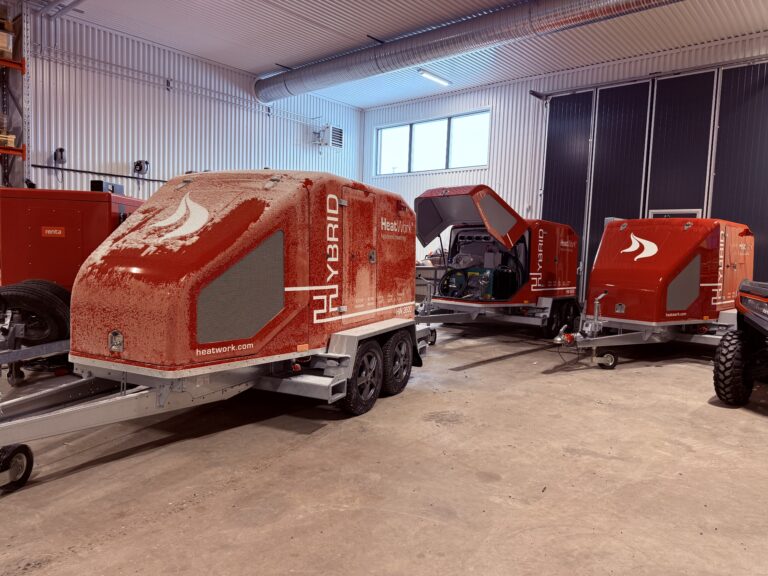
- Store the equipment in a heated area or keep the heat turned on at all times.
- When returning the equipment, it must be be drained and protected against freezing, for example with glycol, before being stored outdoors. Transportation often takes place in an unheated vehicle.
- The heating coil (heat exchanger) in a hydronic heater can freeze and break in as little as 10 minutes in cold weather.
- For mobile high-pressure washers, you should not use windshield washer fluid or similar products; instead, use only
silicate-free antifreeze containing MPG (monopropylene glycol). This is non-toxic and can be used with good results in all similar products.
Sheds and restrooms with plumbing

- The heat should be on throughout the winter.
- Check the connections and operation of the heating cables before the cold weather sets in.
- Drain the plumbing system before turning off the heat. Simply turning on the faucets is not enough—the pipes must be blown out with compressed air.
- Pay special attention to the toilet’s trap and tank.
Responsibility
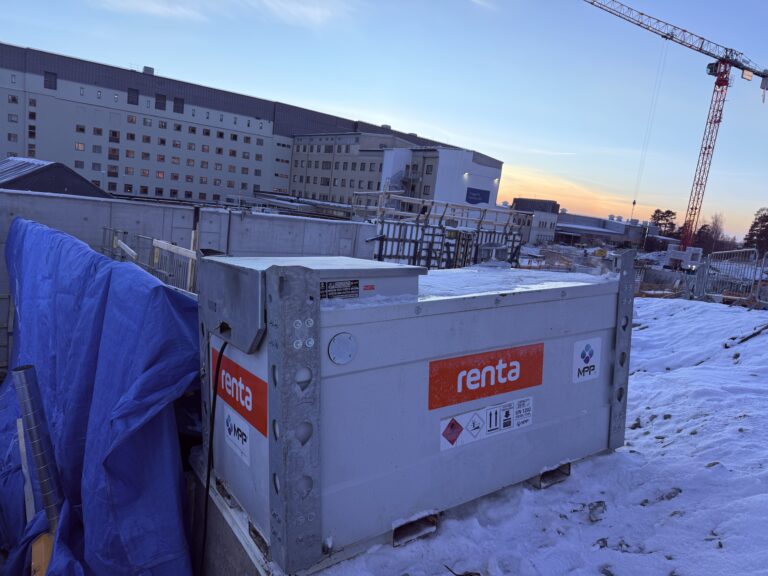
- Rented equipment is always the renter’s responsibility, even in the event of frost damage.
- Rental days are not credited due to weather conditions.