
The standards that we and you set for ourselves
The ISO standards for quality (9001) and the environment (14001) are well-known management tools that not only help us measure and follow up during audits, but also identify nonconformities that are transformed into improvements in which all employees participate. Above all, they provide us with confirmation that we are meeting the requirements you set and face.
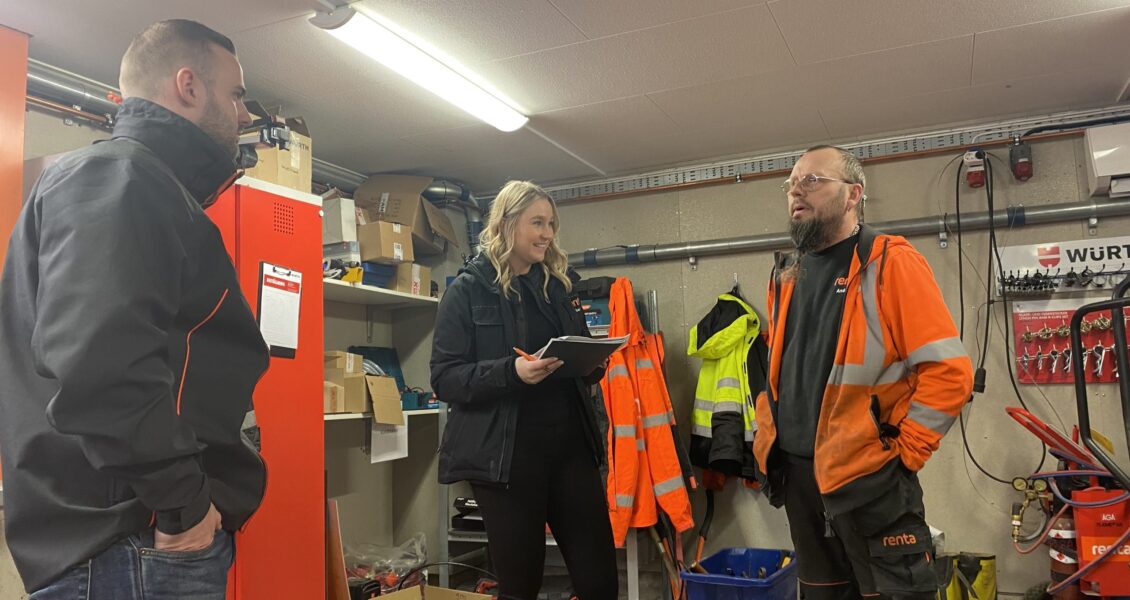
It’s a hazy Monday in Lund when our Quality and Environmental Manager, Rebecca Långström, arrives at a warehouse that’s not only in the middle of a move but is also undergoing an internal audit today—one month before the external audit.
“First, we sit down over a cup of coffee and go through the entire audit; then we do the rounds; and we wrap up by discussing the nonconformities, which should ideally be resolved immediately but no later than 30 days,” says Rebecca Långström, Quality and Environmental Manager.
Complying with the requirements not only gives us a certificate to hang on the wall; it also provides us with processes and approaches that enable us, as a company and as individuals, to move forward. Even though it’s a long list of things to keep in mind.
“ISO sets requirements for what we must meet, but not how. Of course, it’s a little nerve-wracking to face an audit of the entire warehouse.” “Even though we’re confident that we’ll always find a solution and know how to address the challenge or nonconformity,” says David Lindell, acting site manager at Renta Lund.
Why We Conduct Internal Audits
The construction industry’s standards are becoming stricter every year, and these requirements are passed directly on to us as a supplier. We’re left to manage machinery, chemicals, and personnel—while striving to meet ISO standards. BMG Trada is our auditing firm, accredited by Swedac —the Swedish authority responsible for quality assurance across all sectors in Sweden—and together with BMG, we’ve decided this year to conduct audits at 15 Renta depots. For Rebecca, this means doing it twice: once for the internal audit and once for the external one.
– With 30 visits on my part, the internal audit becomes extremely important. “For example, we check to make sure the depot staff have the right training, that the chemicals are labeled correctly, and that the return process is handled properly. Then they have a month to correct everything before it goes live,” says Rebecca.
Now we’re raising the bar for ourselves
We’ve made some progress with our quality and environmental certifications. At the same time, the world continues to change, and the demands placed on builders—and on us—are increasing. That’s why we’ve begun the process of familiarizing ourselves with all the requirements that must be met for ISO certification in Information Security (27001) and Occupational Health and Safety (45001). Our goal is always to improve the quality of our work and our services.